Hi Everyone,
This will be my last post on mobilesinmalawi.blogspot.com. The project is expanding, and I have moved to a new site - www.jopsa.org
It's been wonderful staying connected to everyone here, and I hope you'll all make the jump with me to jopsa.org. All of the posts (and your comments) have been transferred.
See you there!
- Josh
Wednesday, January 21, 2009

Thursday, January 15, 2009
Why FrontlineSMS Fits
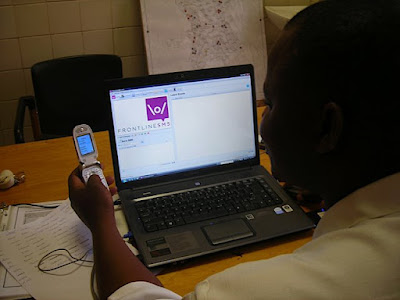
I wrote a bit about the virtues of the software in July, amidst the implementation period. The program has been running for six months, and my latest trip allowed me to document the project's impact on primary care, treatment coordination, and hospital efficiency. Further, the SMS program has saved thousands of hours of travel time for CHWs and hospital staff, and bolstered the CHWs' status within their respective communities - which are now connected to the hospital's resources.
As Ken Banks recently stated, whether or not a mobile tool is suitable is "all about the context of the user." In succinct terms, here are a few reasons that Ken's tool was a the right fit for St. Gabriel's:
- It's free.
- It works with simple, readily-available hardware. I used recycled phones and didn't need to worry about the donated laptop's specifications.
- It doesn't require an internet connection. The hospital's web access is shaky, at best.
- It is incredibly intuitive and easy to use. The nurse running the program had never used a computer in his life. After one hour of training, he was off and FrontlineSMS-ing.
- The hospital found the tool - not the other way around. After I spent time at the hospital two summers ago, the need for connectivity was clear. To meet that need, a tool was employed. It wasn't forced on me or the hospital.
- Straightforward features allowed the hospital to take ownership and get creative, which encouraged user-driven functionality. One example: Auto-replies set to provide CHWs with immediate drug dosage and usage information.
- A ten-second demonstration can illustrate the program's purpose. This hooked clinical staff working within various hospital programs (e.g. HIV treatment coordinator, TB officer, PMTCT director).
- Past text messages, and vital patient informaiton, are just two clicks away.
In examining the success of the SMS initiative over the last half-year, the appropriateness of the technology cannot be ignored.
Monday, January 12, 2009
What's everyone texting about?
A few, very committed individuals - my mother and sister - set out to answer that question. My mom, Casey Nesbit (DPT), receives every message that is sent to the hospital, via email (thanks to a simple forwarding command in FrontlineSMS). Those messages are in Chichewa. For four months, she translated every message to English.
My sister, Elizabeth Nesbit, decided to code and organize every SMS sent by the CHWs. She's a sophomore at Rice University, making her way to medical school. She categorized messages by keywords and/or phrases (e.g. symptoms, supplies, patient updates/referrals, deaths, requests for help, requests for visits, meeting coordination).
Under this introduction is a list of all the symptoms found in messages communicated to the hospital. Elizabeth sorted these symptoms out into categories (body pains, digestive and urinary tract, respiratory tract, swelling, skin and sores, malaria and fever, weakness, heart problems, cancer, and other). She broke apart every incoming message this way.
Below the symptom list, you'll find the fruit of their combined efforts - charts explaining the subject matter of texts to the hospital. Click on any of the charts to view a larger version. These messages fell between mid-August and early December. Shoot me an email if you want to see more of Elizabeth's analysis.
Enjoy!

______________________________________________________


My sister, Elizabeth Nesbit, decided to code and organize every SMS sent by the CHWs. She's a sophomore at Rice University, making her way to medical school. She categorized messages by keywords and/or phrases (e.g. symptoms, supplies, patient updates/referrals, deaths, requests for help, requests for visits, meeting coordination).
Under this introduction is a list of all the symptoms found in messages communicated to the hospital. Elizabeth sorted these symptoms out into categories (body pains, digestive and urinary tract, respiratory tract, swelling, skin and sores, malaria and fever, weakness, heart problems, cancer, and other). She broke apart every incoming message this way.
Below the symptom list, you'll find the fruit of their combined efforts - charts explaining the subject matter of texts to the hospital. Click on any of the charts to view a larger version. These messages fell between mid-August and early December. Shoot me an email if you want to see more of Elizabeth's analysis.
Enjoy!
Symptoms:
scabs, TB, sores on lungs, swollen leg, swelling, weakness, bowel problems, begun to be sick, vomiting, hypertension, disease of the blood pressure, coughing, weak stomach, bowels, rash, malaria fever, HIV positive, coughing, weakness on ARVs, porridge coming out of nose, diarrhea, headache, weakness, swollen legs, delayed reactions, sick, swollen eyes, headache, weakness, loss of appetite, painful scar, unable to walk, leg and joint pain, cannot take medicine, itching stopped, trouble with teeth, sores, swelling in the legs, stomach, swelling, joint pain, trouble straightening leg, congestive heart failure, chest pain, headaches, pain in the joints, paralysis from knees up to waist, asthma, two patients ill, swollen leg, TB, high blood pressure, arm and leg, sores in mouth, mouth sores,TB patient with swollen legs, high blood pressure, stomach swelling, HIV, cough for three weeks, out of breath, swollen, sores, diarrhea, difficulty with legs, patients with diarrhea, stomach twisting, cramping, coughing, TB, HIV, trouble breathing, TB, pain in legs, legs not swollen, can walk, diarrhea, malaria, TB, can’t eat, cancer, not eating, vomiting, burning feet, swollen hand, back pain, severe headache, pain in middle of stomach, sick on ARVs, chest cold, frequent pain, lost voice, chest cold, coughing, chest cold, TB, asthma, trouble walking, boil, swelling, passing blood, TB patient feeling itchy, passing blood, swollen legs, itchiness, shaky because of food, head fever, or malaria, TB, shortness of breath, swelling in armpit, rash, eye, headache, malaria, drinking, convulsions, swollen stomach, elderly, needed food, diarrhea, ear problems, blood oozing out, body wounds, vomiting, swollen, fever, swelling of neck, swelling of stomach—head chief, cough, swelling in legs, stomach problems, out of breath, legs and stomach pain, wound, leg numbness, body aches, diarrhea, difficulty after stomach operation, HIV, crying, hot feet, coughing, malaria, vomiting, sick, trouble with legs, bursting sores, swollen feet, swelling, urine with blood, stomach pain, fever, congestive heart failure, unable to eat, head, fever, general body weakness, demented, swelling, chest cold from TB, body wasting, can’t walk, weak legs, trouble breathing, TB, malaria, body weakness, fever, chest cold, diarrhea, shortness of breath, back ache, leg pain, coughing, sick—malaria, vomiting, loss of appetite, headache, vomiting, malaria, feet pain, fever, back ache, arm pain, body aches, swelling, puss, pregnancy trouble, leg pain, not eating, difficulty breathing, oozing wound, swelling, legs, fever, leg swelling, legs, fever, swollen stomach, slight headache, swelling of legs, face, chronic heart failure, oozing, difficulty with legs, chest cold, stomach pain, diarrhea, leg pain, wound breaking out, leg pain, HIV positive, shingles, leg difficulty, body ache, coughing, cancer—passing urine, yellow body, malaria, convulsions, body aches, body aches, foot pain, swelling of feet, passing urine, soft voice, sleeping for many days, abdominal pain, diarrhea, malaria, cough, weakness, paralysis in feet/toes, illness of head, swollen stomach.
Message Summary
Message Summary

______________________________________________________
Symptoms and Illnesses

____________________________________________________
Supplies


____________________________________________________
Supplies

____________________________________________________
Patient Updates and Referrals

___________________________________________________
Requests for Help

____________________________________________________
"Other"

Many, many thanks to my mother and sister for all their work.
"Other"

Many, many thanks to my mother and sister for all their work.
Saturday, January 3, 2009
Antiretroviral Texting

Grace Kamera runs the HIV treatment program at St. Gabriel's. She oversees atiretroviral therapy (ART) for the catchment area - which includes 250,000 people and an HIV prevalence rate of 15%. While there are a few government-run health centers in the area, St. Gabriel's Hospital is the only facility offering HIV tests, and the only place to get treatment.
Many of the CHWs are ART monitors - they are trained to check in on HIV patients, to see if they're complying with the treatment regimen. Noncompliance deducts from the treatment's efficacy and contributes to drug resistence. Given a limited number of choices for drugs, patient adherence is critical.
Before FrontlineSMS and the accompanying cell phones arrived, Grace was receiving 25 paper reports, per month, from the ART monitors. With 21 ART monitors equipped with cell phones and trained in text messaging, she's received 400 adherence updates since the outset of the project (15/week).
If the paper trail had continued, each report would have been hand-delivered by a CHW. The average round trip is about 6 hours, so the SMS program has saved ART monitors 900 hours of travel time.
If Grace receives an SMS regarding a patient's missteps, she will counsel them when they return for more drugs. The patients are well aware that the CHWs have cell phones, and they're grateful for the connection to the hospital (and Grace). Of all the patients who enroll in the ART program, 80% agree to be monitored. The remainder fear stigmatization within their communities.
Some patients do not turn up to receive their HIV medication. Grace says this is rare - "They usually come a day or two late" - but it happens. She's used the SMS network to track 25 patients who have failed to show, asking the nearest CHWs to report on their status. Sometimes they've left, other times they're unable to travel or they've passed away.
The hospital and the people it serves can't afford a lack of connectivity. With Grace at the reigns, ART monitors will continue serving their communities, 160 characters at a time.
Monday, December 29, 2008
Full Charge!

This morning, we distributed the first batch of solar panels from G24 Innovations. I was also able to reconnect with CHWs I hadn't seen in a while. Everyone was extremely happy - I'll let the pictures tell the story.
 Of course, Alex ran the session. The instructions were quick and easy, and everyone was rather celebratory:
To close the meeting, the CHWs sang a song for me that they had prepared - I'm not sure what the lyrics were, but "phones" and "messages" were included! Afterward, I traveled with Dickson Mtanga and Mary Kamakoko to their villages - it took a good two hours on a bicycle. We spent another 3 hours biking around and seeing patients, before I started back to the hospital. Dickson and Mary, using their new panels:


Saturday, December 27, 2008
SMS for Patient Care, in its Truest Form

I sat down with Alex today, to discuss the FrontlineSMS and its impact on the Home-Based Care (HBC) program at St. Gabriel's. Essentially, he's a one-man, mobile care unit - focusing on chronically ill patients and those who simply cannot travel to the hospital. The backpack, pictured above, is full of medical supplies.
The SMS network has brought Alex to the homes of 130 patients who would not have otherwise received care. That's about five responses, per week, to requests for remote medical attention.
Before the SMS program, Alex was visiting around thirty patients a week, rotating through the HBC roster. He now follows up on five patients per week, usually checking in on those who have been recently discharged from the hospital. The CHWs take care of the rest - since the program started, approximately 520 HBC patient updates have reached the hospital via SMS.
The difference in Alex's HBC activities amounts to about 500 hours and over $1,000 in fuel saved. He has responded to ~40 requests for healthcare supplies (usually dressing materials for wounds and cervical cancer patients). With FrontlineSMS blasting automated responses to drug inquiries and Alex responding to questions regarding basic care, the central SMS hub truly serves the CHWs and their patients.
Alex, who is a highly capable nurse, also holds full shifts in the male ward at the hospital, and is one of two staff members coordinating antiretroviral treatment (ART) for the catchment area. His multitude of responsibilities make time saved in managing the Home-Based Care program extremely valuable.
The first batch of solar panels from G24 Innovations (www.g24i.com) arrived today - I tested one of the products and it quickly charged my phone, to completion, amidst a thunderstorm. More on this later - we are gearing up for training and distribution on Monday.
Thursday, December 25, 2008
Tuberculosis, Meet FrontlineSMS
On Christmas morning, Silia stopped by the guest house to talk about the SMS program. He's responsible for testing, drug provision, and follow-ups for TB patients. He described how he's using FrontlineSMS and the network of cellphone-wielding CHWs. Almost all of what follows developed in my absence.

Some sputum-positive patients don't turn up to receive their medication. It's Silia's job to track these patients and get them back on their drug regimens. Before the SMS program, he was visiting an average of 17 patients per week - this took him three trips on his motorbike. Each trip would take ~9 hours. That's 27 hours per week spent tracking patients in various villages.
The SMS network has allowed Silia to share his workload with the CHWs. He now tracks an average of 20 patients per week via SMS. He simply texts CHWs nearby patients that haven't turned up. As Silia says, the CHWs provide "immediate feedback."
The program has been running for roughly 26 weeks. With the shift to SMS-based patient tracking, Silia had an additional 700 hours to utilize. Not surprisingly, he's been using FrontlineSMS to supplement other areas of his work.
He now visits an average of 4 patients per week, for different reasons. Some messages from the CHWs tell of patients who are too ill to travel to the hospital. Silia will respond by bringing a new supply of drugs. Other messages relay symptoms of community members - e.g. "A man has a chronic cough, and we suspect TB." Silia will visit the patients, and collect a sputum sample. He'll return to the hospital to do testing and send the results, by SMS, back to the CHW.
Finally, when patients at the hospital test positive for TB, they're told which CHWs near their home have cell phones.

Coming up: Impact on Home-Based Care, PMTCT, Public Health, and HIV/AIDS programs

Some sputum-positive patients don't turn up to receive their medication. It's Silia's job to track these patients and get them back on their drug regimens. Before the SMS program, he was visiting an average of 17 patients per week - this took him three trips on his motorbike. Each trip would take ~9 hours. That's 27 hours per week spent tracking patients in various villages.
The SMS network has allowed Silia to share his workload with the CHWs. He now tracks an average of 20 patients per week via SMS. He simply texts CHWs nearby patients that haven't turned up. As Silia says, the CHWs provide "immediate feedback."
The program has been running for roughly 26 weeks. With the shift to SMS-based patient tracking, Silia had an additional 700 hours to utilize. Not surprisingly, he's been using FrontlineSMS to supplement other areas of his work.
He now visits an average of 4 patients per week, for different reasons. Some messages from the CHWs tell of patients who are too ill to travel to the hospital. Silia will respond by bringing a new supply of drugs. Other messages relay symptoms of community members - e.g. "A man has a chronic cough, and we suspect TB." Silia will visit the patients, and collect a sputum sample. He'll return to the hospital to do testing and send the results, by SMS, back to the CHW.
Finally, when patients at the hospital test positive for TB, they're told which CHWs near their home have cell phones.

Some numbers from the TB program for the last 6 months:
700 hours of follow-up time saved
450 follow-ups via SMS
(At least) $2000 in motorbike fuel saved
100 new patients enrolled in TB treatment program
700 hours of follow-up time saved
450 follow-ups via SMS
(At least) $2000 in motorbike fuel saved
100 new patients enrolled in TB treatment program
Coming up: Impact on Home-Based Care, PMTCT, Public Health, and HIV/AIDS programs
Monday, December 22, 2008
The Real Story
Here's the truth - this project involves people, rich in character and experience. It's not only about the technology. If I'm interested in the tech fulfilling its potential, I've got to pay attention to the people.
Case in point:
I spent yesterday mulling over text messages sent through FrontlineSMS over the last four months, noting which CHWs had communicated least. I put together a list of a few CHWs I suspected might be having signal issues. Looking at the map, three of six CHWs on this list were clumped together - clearly, they must not have good reception.
I told Alex about my findings, this morning. He took a look at the names and said, "Well, Bernadeta took her phone with her to Zambia, we've discovered that Chrissy is not able to write her own name, and Jereman's phone battery was stolen while it was charging at the local barber shop." My time away from the hospital almost made me forget the multitude of stories swirling around these phones and the hospital they're linked to. With 100 phones in the field, three random problems are to be expected.
Whether or not everyone agrees, I think personal stories convey a project's successes, as well as their failures. Silia, a hospital attendant who runs the hospital's TB program, said yesterday, "The SMS project is very, very good - I can get much more work done, instead of driving the motorbike everywhere. It's very simple - we can expect feedback about patients immediately." I met the new hospital administrator today, and his second sentence was, "You know, it's not only beneficial for communication. The volunteers are now committed to their work, and more will follow."
I'm letting stories from patients, CHWs, and the medical staff at St. Gabriel's drive my exploration into this project's value. I turned to people for the direction of the initiative, and I'm turning back to them to measure part of its impact.
The first batch of solar panels arrives tomorrow.
Case in point:
I spent yesterday mulling over text messages sent through FrontlineSMS over the last four months, noting which CHWs had communicated least. I put together a list of a few CHWs I suspected might be having signal issues. Looking at the map, three of six CHWs on this list were clumped together - clearly, they must not have good reception.
I told Alex about my findings, this morning. He took a look at the names and said, "Well, Bernadeta took her phone with her to Zambia, we've discovered that Chrissy is not able to write her own name, and Jereman's phone battery was stolen while it was charging at the local barber shop." My time away from the hospital almost made me forget the multitude of stories swirling around these phones and the hospital they're linked to. With 100 phones in the field, three random problems are to be expected.
Whether or not everyone agrees, I think personal stories convey a project's successes, as well as their failures. Silia, a hospital attendant who runs the hospital's TB program, said yesterday, "The SMS project is very, very good - I can get much more work done, instead of driving the motorbike everywhere. It's very simple - we can expect feedback about patients immediately." I met the new hospital administrator today, and his second sentence was, "You know, it's not only beneficial for communication. The volunteers are now committed to their work, and more will follow."
I'm letting stories from patients, CHWs, and the medical staff at St. Gabriel's drive my exploration into this project's value. I turned to people for the direction of the initiative, and I'm turning back to them to measure part of its impact.
The first batch of solar panels arrives tomorrow.
Saturday, December 20, 2008
Back on the (Wet) Ground

I'm back in my old room at the hospital's guest house, and it's pouring rain. I arrived just in time for the last Home-Based Care course - 21 new, volunteer CHWs were reviewing referral procedures, patient rights, the contents of their drug kits, etc. The group, seen above, is copying acronyms into their notebooks. Here's a snapshot of what they're writing:

At the end of the session, the CHWs were asked to turn in a piece of paper describing the location of their home. Most of their responses were paragraphs long - some included extensive maps.
Joanna, who is running PointCare's CD4-count outreach program, relayed an interesting conversation with one of the CHWs a week ago. She traveled to their farthest site - a good 100 mile drive - and ran into Zakeyo, who said, "You know, Josh is coming on the 19th." I checked FrontlineSMS, and Alex hadn't warned him. It's exciting to know that the next time I see him, I'll pass along a solar panel accompanied by a solar-powered light.
Tomorrow, I'm going to spend some quality time with FrontlineSMS - working through the communication over the last four months.
Please comment freely, or shoot me an e-mail, with any questions. I have just two weeks before I return to Stanford, and I'm trying to make the most of it! As always, thanks for reading.
Thursday, December 4, 2008
CNN - "Texting to save lives"
That's the headline the CNN Technology site is using to pull visitors to a story covering the project. Here's the link:
Text service provides more than a Band-Aid for rural health service by Steve Mollman
It's amazing to see Alex and Grace on the site, and I think Steve wrote a wonderful article. I'm headed back to the hospital for Christmas break, and I'll be updating the blog regularly - starting now. Here's a (very) quick 30-second video, as a re-introduction to the project and a few of the people involved.
Text service provides more than a Band-Aid for rural health service by Steve Mollman
It's amazing to see Alex and Grace on the site, and I think Steve wrote a wonderful article. I'm headed back to the hospital for Christmas break, and I'll be updating the blog regularly - starting now. Here's a (very) quick 30-second video, as a re-introduction to the project and a few of the people involved.
Tuesday, October 7, 2008
Busy October
Here's some information on conferences and events I'm set to attend in the next month:
October 9th - Stanford Undergraduate Research and Public Service Symposium
October 11th - BarCamp Africa @ Google
October 12-14th - Alex Ngalande from St. Gabriel's Hospital will be speaking at MobileActive08
October 14-15th - Institute For The Future's 'Reinventing Health Care in a Mobile World'
October 22nd - Stanford Community Health and Public Service Fall Forum
October 23rd, 9AM - Health 2.0 Conference
October 9th - Stanford Undergraduate Research and Public Service Symposium
October 11th - BarCamp Africa @ Google
October 12-14th - Alex Ngalande from St. Gabriel's Hospital will be speaking at MobileActive08
October 14-15th - Institute For The Future's 'Reinventing Health Care in a Mobile World'
October 22nd - Stanford Community Health and Public Service Fall Forum
October 23rd, 9AM - Health 2.0 Conference
Thursday, September 25, 2008
Frequently Asked Questions
Building an SMS Network into a Rural Healthcare System
This guide provides an inexpensive way to create an SMS communications network to enable healthcare field workers as they serve communities and their patients. The steps are purposefully simple – the system is easy to set up, use and maintain.
Contents
1. Who might benefit from a text-based communications network?
2. What are the benefits for my hospital, clinic or organization and the people it serves?
3. What technology do I need?
4. Do I need an internet connection?
5. How expensive is an SMS network?
6. How do I distribute communication credit?
7. How much staff training is required?
8. How much time does it take, per day, to manage the SMS network?
9. How do I conduct SMS training?
10. What is the best power source for the cell phones?
11. Do the CHWs communicate with each other?
12. Where can I find more information on FrontlineSMS?
FAQ #1: Who might benefit from a text-based communications network?
In the summer of 2008, an SMS network was implemented at St. Gabriel’s Hospital in rural Malawi. The hospital serves ¼ million people, spread throughout a catchment area 100 miles in radius. St. Gabriel’s recruited 600 community health workers (CHWs) to serve as volunteer healthcare representatives in their villages. Disconnected from hospital services and resources, the CHWs’ ability to help patients was limited.
Hospitals, clinics, and organizations faced with the defining challenges of rural healthcare – namely, distance and the isolation it breeds – are set to benefit from a low-cost SMS network. Given specific steps and tools to connect individuals, SMS (“short message service”) can provide the missing link – between a hospital and its field worker, patients, support group members, or CHWs in their respective villages.
Ultimately, the aim is for benefits to fall upon those served by the health network. See FAQ #2 for an outline of the benefits derived from a newly implemented SMS program that is providing connectivity for a rural healthcare network.
FAQ #2: What are the benefits for my hospital, clinic or organization and the people it serves?
Implemented at a hospital in rural Malawi in the summer of 2008, a text-based communications network is making a significant impact on hospital operations and patient care. Here is a list of the current functions of the SMS network:
• Requests for remote patient care
CHWs text the hospital staff when immediate care is needed, and the Home-Based Care mobile unit subsequently visits the patient. Patient location and health status are communicated, allowing the mobile team to bring needed drug supplies. According to Dickson Mtanga, a CHW in the pilot program, “When I have a problem with my patient, I just send a message to the hospital, at once. If they are helped and assisted, I feel so much better.”
• Patient tracking
The hospital is now able to track patients in their distant communities. According to Mr. Ngalande, “Each and every department is free to use FrontlineSMS. We have ART, Home-Based Care, TB, PMTCT (Prevention of Mother to Child Transmission). For example, TB patients who are not coming for their appointments, we use FrontlineSMS to text volunteers close to the patient’s village. It’s easy to get feedback from the community.”
• Checking drug dosages
CHWs in the field have been given basic drug supplies (e.g. Panadol, Ferrous Sulfate, eye ointments) for primary care. The CHWs now check drug dosages and uses within seconds. When FrontlineSMS receives an SMS with a drug name, it automatically responds to the health worker with that drug’s information.
• Patient updates
CHWs regularly update the hospital staff with regards to patient status, including reporting patient deaths. These messages have created a post-discharge connection to patients’ well being.
• Coordinating Home-Based Care visits
In addition to responding to medical emergencies in the communities, the Home-Based Care (HBC) unit also follows a schedule of home visits – sometimes checking on patients have been discharged recently. Other patients are enrolled in the hospital’s palliative care program. Before traveling to the patients’ villages, the mobile unit text messages CHWs in close proximity to the clients they plan to visit. Any response by the CHW (e.g. “Patient is not at home.”) is forwarded to the mobile team’s phone, allowing medical staff to maximize their productivity by visiting available patients.
• CHW-to-CHW communication and group mobilization
CHWs are now communicating and collaborating. All texts are shuttled through the hospital, and FrontlineSMS commonly relays messages and requests between CHWs. This has been an important function in setting meeting dates for Village AIDS Committees and linking HIV/AIDS support groups. Hospital activities throughout the catchment area (including microfinance and Positive Living programming) are organized using the SMS network. Baxter Lupiya, a CHW in TA Kalolo, notes, “We used to travel a long distance. Now, we have easy communication with others. The program must be continued, because it is so good!”
• Integrating connectivity into HIV counseling
HIV Counseling and Testing (HCT) at the hospital has been augmented because of the SMS network. If a client tests positive, he or she is paired with to an HIV-positive CHW with a phone – these volunteers act as models for Positive Living and provide comfortable, relatable links to the hospital.
Other benefits:
• CHW status
The connection to hospital services has solidified the CHWs’ role as legitimate healthcare representatives in their villages. The patients and their communities, according to the program’s participants, have noticed the phones, each one clearly marked with the hospital’s logo.
• Incentives and accountability
The phones provided very concrete incentives for the volunteer work done by the CHWs. The SMS network created, for the first time, a way to track the CHWs’ activities, paving the way for more informed decisions regarding allocation of resources (e.g. which CHWs should receive bicycle ambulances).
The listed benefits developed organically from a particular hospital’s needs. Undoubtedly, future demands will uncover new functionalities. For example, the hospital in Malawi is exploring the use of FrontlineSMS’s ‘Forms’ function to collect structured data regarding the status of palliative care patients – information that can quickly be exported to donors and organizations supporting those patients.
FAQ #3: What technology do I need?
Here is a quick list of the equipment used in Malawi:
- 75 Motorola V195 cell phones, purchased at $15/phone from a recycling company
- 15 Nokia 6210 cell phones, $40/phone
- 10 Nokia 6100 cell phones, $50/phone
- 1 Falcom SAMBA75 GSM modem, $200
- 1 donated Compaq Presario laptop
- 100 cell phone chargers + Malawian adapters
Software:
- FrontlineSMS version 1.4.7, free software downloaded at www.frontlinesms.com/download
- FrontlineSMS is running on a Windows Vista operating system
A few notes on hardware and software:
• As long as the cell phones get service and function on your local network – they can send/receive text messages – they will work with FrontlineSMS. Motorola V195 phones were chosen for the program in Malawi because of their low cost and ease of use. The Nokia phones were chosen for similar reasons – teaching texting using the Nokia models (6100 and 6210) was straightforward. The steps for sending an SMS with the Motorola V195 were slightly more complex.
• Each distributed phone was labeled with the hospital logo. This was important for ownership and accountability, along with community transparency and health worker status.
• I had the Malawian Department of Surveys print a map of the hospital’s catchment area. On this map, color-coded pins were placed, showing where distributed phones are located (along with each CHW’s program type, e.g. Home-Based Care or ART Monitoring).
• When selecting phones for your network (if you are purchasing new or used phones), keep a few things in mind:
1. Consider the experience of the user. In most situations, simpler is better – sending and receiving an SMS is meant to be easy.
2. Check to see which bands (e.g. GSM 900 band) work with your local network, and make sure the phone supports that band. Here is a site with GSM coverage maps for a number of countries: http://www.gsmworld.com/roaming/gsminfo/index.shtml
• The new versions of FrontlineSMS are configured to run on a number of operating systems. You can find comprehensive information on Windows, Mac and Linux compatibilities here: http://www.frontlinesms.com/download/requirements.php
• Although the SAMBA75 GSM modem is being used in Malawi, a number of modems and cell phones may be connected to the computer running FrontlineSMS. For a list of phones and modems that work well, see the following link: http://www.frontlinesms.com/download/requirements.php
FAQ #4: Do I need an internet connection?
All that is necessary is a cellular network signal on your modem or phone – no internet connection is needed. If you can send and receive text messages in your area, FrontlineSMS will work. Check the GSM coverage map link for more information on your local network: http://www.gsmworld.com/roaming/gsminfo/index.shtml
FAQ #5: How expensive is an SMS network?
The cost of your network will largely depend on the scale (e.g. the number of phones and the volume of text messages processed per day). Here are the numbers in Malawi:
• The pilot network includes 75 community health workers (CHWs) and 10 members of the hospital staff.
• During the final weeks of the implementation period (weeks 7 and 8), an average of 10 messages were received from the hospital per day. The number of responses by the hospital (along with new patient tracking requests) varied.
• Once the phones are distributed, the only running cost is the rate per SMS. Given that one SMS costs 10 cents, and they are free to receive, the program is running on just over $1/day. So, $4,000 will fund the SMS network for a little over 10 years.
FAQ #6: How do I distribute communication credit?
There are a few options here. Your distribution method will depend on the structure of your healthcare delivery teams and/or volunteer organization. This is how we tackled this logistical issue in Malawi:
• Celtel, the local network provider, has a ‘Me2U’ service that allows a user to send communication credit (“units”) from one phone to another via text message.
• Every phone that we distributed had a 2-digit identification number engraved on its case, specific to that phone and SIM card.
• Using the keyword and auto-forward functions in FrontlineSMS, we automated the entire top-up process, allowing the CHWs to request automatic unit refills.
• For example, the owner of phone #11 sends a message to the hospital, “11 units” which is recognized by FrontlineSMS. FrontlineSMS then sends a message to Celtel’s Me2U service, requesting that phone #11 receive another dollar of credit.
Other options include passing large quantities of units to trusted individuals, such as CHW leaders, coordinators, or other staff who have regular contact with those receiving phones. The key to maintaining accountability is making it clear that FrontlineSMS documents every message received by the hospital. Be sure it is understood that the communication credit given to your contacts should be used to communicate with your hospital, clinic, or organization.
FAQ #7: How much staff training is required?
No technical experience is required for implementing or sustaining an SMS network. The nurse in Malawi managing day-to-day communication, using FrontlineSMS on the hospital laptop, had never used a computer before the SMS program was introduced.
Within the first week, the hospital staff understood the functionalities of FrontlineSMS – for this reason, the uses of the SMS network developed organically, shaped by the needs of the hospital, the CHWs, and the patients they serve.
After a 1-hour training session on operating FrontlineSMS, the nurse and ART coordinator were left with a simple, step-by-step operation guide. The guide, available to anyone who requests it, uses images of FrontlineSMS, showing how to:
1. Send a message
2. Check for new messages
3. Add/delete a contact or group
4. Copy and paste text (a useful explanation, for first-time computer users)
5. Ensure that FrontlineSMS is communicating with the attached modem (or phone)
6. View a specific contact’s message history
FrontlineSMS also has a built-in Help guide, which explains in detail each function, including forms, e-mail, and keywords. The keywords and their respective automated action (e.g. auto-forward, auto-reply) were all created on the ground, and I have absolutely no technical background.
The program, along with the SMS data collected, is purposefully uncomplicated. According to Alex Ngalande, the nurse running FrontlineSMS for the pilot program, “[Setting up FrontlineSMS] was very quick. And, people didn’t know that this thing could work here – because, it’s our first time to have this kind of system whereby people can directly communicate with the hospital… It’s simple and straightforward.”
FAQ #8: How much time does it take, per day, to manage the SMS network?
Towards the end of the pilot period (weeks 7 and 8) in Malawi, two members of the hospital staff were spending 15 minutes every morning and 15 minutes at the end of the workday managing incoming and outgoing SMS data.
This management time (an average of 30 minutes per day) included reading new messages, responding to urgent requests, forwarding CHW-to-CHW messages, passing on patient updates to relevant hospital staff, sending out patient tracking requests, and processing other outgoing texts.
FAQ #9: How do I conduct SMS training?
The success of the SMS program relies on the users being able to operate their phones. For this reason, patient training and a slow rollout are recommended. In Malawi, we trained 10-15 community health workers (CHWs) per week for 6 weeks (75 CHWs in all) – each session lasted about three hours. A few tips, especially applicable if your contacts are first time cell phone users:
1. Start with the basics. The first step displayed on our training posters? Open the phone.
2. Keep the training groups small.
3. Take simple steps to make your instructions outstandingly clear – we made posters showing which buttons to press.
4. After each ‘lesson,’ have a member of the group lead the others through what they learned (e.g. after teaching the group how to check for new text messages in the phone’s inbox, have a participant repeat the steps).
5. Poll the group to find out how many have used a cell phone before. Have the experienced participants guide others through the SMS steps.
6. Have the group practice texting something simple (e.g. “Malawi”), then something more difficult (e.g. their full name and birth date).
7. Have expectations for the group prepared (e.g. what will be communicated, and when they are expected to communicate).
8. The most committed volunteers received the first phones. This distribution method contributed to the success of the pilot program.
The training in Malawi was conducted in Chichewa by hospital staff. The staff running the training sessions knew the CHWs, and were used to speaking to groups.
FAQ #10: What is the best power source for the cell phones?
Depending on your area of operation, electricity may or may not be widely available or affordable. The pilot in Malawi looked at a few options:
• When asked, “Who has access to electricity?” every CHW said they could charge the phones on their own. This turned out to be a half-truth – they had to pay a small fee to charge the phones at a local barbershop, as an example of a local solution.
• We created a local charging station, next to the hospital, where the CHWs could charge their phones free of charge.
• I brought hand-powered chargers, which simply did not work.
• As a short-term solution, CHWs in the most remote locations were given battery-powered phone chargers (which provide 2-3 full charges per AA battery).
• For sustainable, remote, off-the-grid charging, individualized solar panels may be the best option. Solar panels will power the SMS network for the pilot program in Malawi.
FAQ #11: Do the CHWs communicate with each other?
Absolutely. This was one of the first questions raised by the CHWs in the pilot group in Malawi. CHW-to-CHW communication is vital for group mobilization, and has a large impact on day-to-day CHW activities. It’s important to realize, however, that FrontlineSMS will not track messages between phones in the field. If one CHW wants to contact his colleague many miles away, they are asked to send a message to the hospital – along with directions to forward the message: e.g. “Send to John: The support group will meet this Saturday, at 10 o’clock in the morning. From Dickson.” This system ensures that all messages are accounted for.
FAQ #12: Where can I find more information on FrontlineSMS?
Visit www.frontlinesms.com for more information on the free, open-source program. The site includes a detailed description of the software, demo, map of current users, and download request form.
The following is an interview with Alex Ngalande, the Home-Based Care nurse in Malawi who is currently running FrontlineSMS on setting up and using the program:
http://www.youtube.com/watch?v=Go09UxPEW7k
Here is an interview with a community health workers involved in the pilot program. She speaks on volunteer activities, as well as the impact the SMS-based network has on patient care:
Verona Kapagawani: http://www.youtube.com/watch?v=kHXP5S0HkIQ&feature=related
Thursday, September 4, 2008
In Writing - What's Happened
Healthcare challenges
In 2008, FrontlineSMS was implemented as a central SMS hub for a rural hospital in Namitete, Malawi. Located 60 km from Lilongwe, St. Gabriel’s Hospital serves 250,000 Malawians spread over a catchment area 100 miles in radius. The vast majority of the people the hospital serves are subsistence farmers, living on under $1 a day.
• The catchment area has an HIV prevalence rate of 15% combined with widespread malnutrition, diarrhea, Multi-Drug-Resistant Tuberculosis (MDR TB), Pneumocystis pneumonia (PCP) and other opportunistic infections. Three medical officers are employed at St. Gabriel’s – creating a physician-to-patient ratio of 1:80,000.
• The hospital has enrolled over 600 volunteers to act as community health workers (CHWs) in their respective villages. Many of the volunteers are active members of the HIV-positive community, and were recruited through the hospital’s antiretroviral therapy (ART) program.
• When one ART monitor, Benedict Mgabe, was asked why he started volunteering, he replied, “I began when I saw my relatives and friends who were suffering from HIV and AIDS. I took it very personally; I knew I must get involved in curbing this epidemic.”
A need for a true community health network
Distance presents an often-insurmountable obstacle for patients seeking care at St. Gabriel’s. Many patients walk up to 100 miles to the hospital; those with more resources ride bicycles or oxcarts. In order to report patient adherence, ask for medical advice, or request medical care for remote clients, CHWs had to travel similar distances to the hospital’s doors.
The most motivated of the CHWs kept their own patient records, and journeyed to the hospital every few months. Their activities effectively isolated by distance, the impact of the volunteers’ work was restricted to their communities and disconnected from the centralized medical resources at the hospital – their potential role delivering healthcare stifled by disjunction.
Implementing the project
During the summer of 2008, I traveled to St. Gabriel’s with 100 recycled cell phones and a copy of FrontlineSMS – a free program developed by Ken Banks to act as a central text-message hub. My plan was to implement a text-based communications network for the hospital and the CHWs.
In groups of 10-15, CHWs were brought to the hospital, given cell phones, and trained in text messaging. The volunteers’ locations were mapped, and the phones were disseminated throughout the catchment area.
Stationed at the hospital, a laptop running FrontlineSMS coordinates the health network’s activities. The day-to-day program operations were handed over to hospital staff within two weeks. FrontlineSMS is operated by Alexander Ngalande, a nurse who heads the hospital’s Home-Based Care program.
Mr. Ngalande, on setting up and running FrontlineSMS:
“It was very quick. And, people didn’t know that this thing could work here – because, it’s our first time to have this kind of system whereby people can directly communicate with the hospital using FrontlineSMS. It’s simple and straightforward.”
Impact on patient care and hospital operations
The SMS network has enabled the following:
• Requests for remote patient care
- CHWs text the hospital staff when immediate care is needed, and the patient is subsequently visited by the Home-Based Care mobile unit. Patient location and health status are communicated, allowing the mobile team to bring needed drug supplies. According to Dickson Mtanga, a CHW in the pilot program, “When I have a problem with my patient, I just send a message to the hospital, at once. If they are helped and assisted, I feel so much better.”
• Patient tracking
- The hospital is now able to track patients in their distant communities. According to Mr. Ngalande, “Each and every department is free to use FrontlineSMS. We have ART, Home-Based Care, TB, PMTCT (Prevention of Mother to Child Transmission). For example, TB patients who are not coming for their appointments, we use FrontlineSMS to text volunteers close to the patient’s village. It’s easy to get feedback from the community.”
• Checking drug dosages
- CHWs in the field have been given basic drug supplies (e.g. Panadol, Ferrous Sulfate, eye ointments) for primary care. The CHWs now check drug dosages and uses within seconds. When FrontlineSMS receives an SMS with a drug name, it automatically responds to the health worker with that drug’s information.
• Patient updates
- CHWs regularly update the hospital staff with regards to patient status, including reporting patient deaths. These messages have created a post-discharge connection to patients’ well being.
• Coordinating Home-Based Care visits
- In addition to responding to medical emergencies in the communities, the Home-Based Care (HBC) unit also follows a schedule of home visits – sometimes checking on patients have been discharged recently. Other patients are enrolled in the hospital’s palliative care program. Before traveling to the patients’ villages, the mobile unit text messages CHWs in close proximity to the clients they plan to visit. Any response by the CHW (e.g. “Patient is not at home.”) is forwarded to the mobile team’s phone, allowing medical staff to maximize their productivity by visiting available patients.
• CHW-to-CHW communication and group mobilization
- CHWs are now communicating and collaborating. All texts are shuttled through the hospital, and FrontlineSMS commonly relays messages and requests between CHWs. This has been an important function in setting meeting dates for Village AIDS Committees and linking HIV/AIDS support groups. Hospital activities throughout the catchment area (including microfinance and Positive Living programming) are organized using the SMS network. Baxter Lupiya, a CHW in TA Kalolo, notes, “We used to travel a long distance. Now, we have easy communication with others. The program must be continued, because it is so good!”
• Integrating connectivity into HIV counseling
- HIV Counseling and Testing (HCT) at the hospital has been augmented because of the SMS network. If a client tests positive, he or she is paired with to an HIV-positive CHW with a phone – these volunteers act as models for Positive Living and provide comfortable, relatable links to the hospital.

Other benefits:
• CHW status
- The connection to hospital services has solidified the CHWs’ role as legitimate healthcare representatives in their villages. The patients and their communities, according to the program’s participants, have noticed the phones, each one clearly marked with the hospital’s logo.
• Incentives and accountability
- The phones provided very concrete incentives for the volunteer work done by the CHWs. The SMS network created, for the first time, a way to track the CHWs’ activities, paving the way for more informed decisions regarding allocation of resources (e.g. which CHWs should receive bicycle ambulances).
A whole-hearted thanks goes out to everyone who has been reading these posts. I'd be thrilled to hear from you. In the next few days, I'll put up a post that will (attempt to) cover the various, exciting ways this project is moving forward. In the next week or so, I'll also be developing a DIY guide, based on a series of FAQs - much more on this later.
Friday, August 22, 2008
Verona Kapagawani; Community AIDS Committee Chair
As promised, here is an interview with one of the Community Health Workers involved with the pilot in Malawi. Verona speaks on why she started volunteering, how the SMS program has changed her ability to care for patients, and what it means to be a healthcare volunteer.
Here are a few of the messages sent to the hospital by Verona, in the first weeks of the pilot:
Here are a few of the messages sent to the hospital by Verona, in the first weeks of the pilot:
AK has a problem of CCF; his medicine is finished, and he is getting a bit better.
AJ is on TB treatment, he is taking the drugs following instructions. He is improving. AM had swollen thighs but she is improving. She is taking drugs following instructions - the guardian is strict.
Adherence: TN is alright. He is taking the drugs following the instructions, he did not miss any day.
PT is very fine, working hard in the garden. He did not miss any day.
Friday, August 15, 2008
Straight from the User
After a few days of traveling, I'm back at Stanford. It was difficult to leave Namitete, but there's plenty to be done in the US.
Below, I've uploaded an interview with Alexander Ngalande, the hospital's Home-Based Care nurse, regarding his experience with FrontlineSMS. Please excuse the poor quality - my equipment was limited to a small, digital camera.
Below, I've uploaded an interview with Alexander Ngalande, the hospital's Home-Based Care nurse, regarding his experience with FrontlineSMS. Please excuse the poor quality - my equipment was limited to a small, digital camera.
Monday, August 4, 2008
Need-Stressing Couched in Gratefulness*
 I promise I'll explain the title - in a bit. First, here's a re-cap of some of the week's developments:
Above, I've provided a snapshot of today's activities in the Home-Based Care (HBC) office, the new home of FrontlineSMS and the CHW maps. From left to right - Neggie, a nurse in labor ward; Grace, the hospital's ART coordinator; Alex, the HBC nurse. Neggie showed up at the office with a list of mothers - they were enrolled in the hospital's PMTCT program, but they've failed to report for their 6-week follow up (when blood samples are taken in order to determine the child's HIV status by DNA PCR). Alex is locating the mothers' villages, and reading off the ID numbers of CHWs in their vicinity.
 These days, the majority of the patient visits made by the mobile team are responses to SMS requests for immediate medical attention. Still, certain visits are scheduled follow-ups after patients have been discharged. Traveling with Alex, I realized that, at least half the time, the patient is nowhere to be found. Alex now sends a few quick messages to the CHWs overseeing the patients he's planning on visiting, letting them know he'll be stopping by. While he's out in the field, any response from the CHWs is forwarded to his cell phone. This assures that he sees patients who are available - and avoids 40-mile journeys to discover a patient is away, selling maize in Mozambique.
A CD4 outreach initiative funded by the World Bank starts up later this week. They will use the CHW communications network to inform villagers of testing sites and dates - aiming to increase client turnout, thereby bolstering access to the free testing services.
 This past Saturday, we gathered the first 30 CHWs for a refresher course - explaining the automatic unit top-ups and the drug keywords (we've already had BB Paint, TEO, Panadol, and Multivitamin info requests). After the session, I video-interviewed four of the CHWs, in English.
I'm leaving Malawi this coming Friday, and when I'm back at Stanford I will be uploading the videos. I'm planning to embed them in individual posts - so you can hear the stories of care from those who have lived them. Their general attitude might be described as thankful, yet realistic about the pressing needs of their families and friends - hence, the title of this post. Malawians are said to spend roughly 10 percent of their waking hours at funerals. The statistic does reflect troubling times - but it also demonstrates the blurred boundaries between family and fellowship. Villages are full of brothers, sisters, and mothers - some share heredity, but all share circumstances. Every text message sent by the CHWs has invited me to appreciate the true meaning and function of community.
*title credit: Maggie Chen
Sunday, July 27, 2008
Caught Smoking

A baker's dozen left St. Gabriel's Hospital on Thursday with cell phones, trained and ready to communicate. Below, a CHW practices texting "Malawi." He's the Home-Based Care provider in his village, and runs an orphan care center.
 Text messages are notorious for being concise, hence the Short Message Service (SMS) protocol and its 160 character/message cap. Most of the messages to and from the hospital are brief, and to the point. Some CHWs, however, send stories - sometimes, five messages in length. A few examples (translated from Chichewa):
PF is refusing to use the condoms in his family which has made his wife to be pregnant of three months and he also drinks alcohol much, and also likes women. In so doing I advised him not to stop using condoms and also to stop drinking because they are putting his life in danger. And his wife should start going to her doctor visits, like at St. Gabriel's.
I found TJ smoking, and he is on TB medication. He failed his first treatment in 2006, and this is his second treatment. AJ is on TB treatment, he is taking the drugs following instructions. He is improving. AM had swollen thighs but she is improving. She is taking drugs following instructions - the guardian is strict.
Both of these CHWs texted for the first time a little over a week ago.
I'm planning to video-interview a few of the CHWs this Tuesday and Wednesday. Any questions for them?


Sunday, July 20, 2008
Web of Positive Living
At the weekly ART meeting, the "Prevention of Mother-To-Child Transmission" (PMTCT) staff reported on the number of children from their program who have been confirmed HIV-positive.
Mothers are given a single dose of nevirapine, to be taken during labor (whether they deliver at home or in the hospital), and children born at the hospital to HIV-positive mothers receive short-course AZT, in an attempt to deter transmission of the virus. Each case that the PMTCT staff reported had a story. Some examples:
After talking with hospital staff, we're going to integrate the new SMS network into the hospital's Voluntary Counseling and Testing (VCT) services. As part of their post-test counseling, every client who tests positive will be paired with an HIV-positive CHW with a cell phone. Many of the CHWs we have trained to text are committed members of the HIV-positive community - leaders of support groups, impressively drug-adherent, and people who spread a 'Positive Living' message.
These CHWs, along with their mobiles, will provide HIV-positive individuals a link to hospital services, a way to privately ask questions, and someone to look over their health. It will also provide a means by which to track pregnancies for HIV-positive patients, and follow deliveries for mothers in the PMTCT program.
 Above - the fourth group of CHWs. After the training session, Alex and I situated each CHW's ID pin on the map of the catchment area. As promised, new colors appeared - youth counselors and reproductive health volunteers are now connected to the hospital.
 At the week's medical meeting, a new category was reported - "SMS Follow-Ups" - for the TB and ART programs.
Mothers are given a single dose of nevirapine, to be taken during labor (whether they deliver at home or in the hospital), and children born at the hospital to HIV-positive mothers receive short-course AZT, in an attempt to deter transmission of the virus. Each case that the PMTCT staff reported had a story. Some examples:
- Mothers enrolled in the program for their first birth, but neglected to contact the hospital during a subsequent pregnancy
- Faced with substantial travel costs, some mothers played their (rather, their children's) chances - delivering without PMTCT ARVs
- Mothers from a certain village failed to deliver at the hospital, afraid the care-seeking behavior would reveal their status
After talking with hospital staff, we're going to integrate the new SMS network into the hospital's Voluntary Counseling and Testing (VCT) services. As part of their post-test counseling, every client who tests positive will be paired with an HIV-positive CHW with a cell phone. Many of the CHWs we have trained to text are committed members of the HIV-positive community - leaders of support groups, impressively drug-adherent, and people who spread a 'Positive Living' message.
These CHWs, along with their mobiles, will provide HIV-positive individuals a link to hospital services, a way to privately ask questions, and someone to look over their health. It will also provide a means by which to track pregnancies for HIV-positive patients, and follow deliveries for mothers in the PMTCT program.
 Above - the fourth group of CHWs. After the training session, Alex and I situated each CHW's ID pin on the map of the catchment area. As promised, new colors appeared - youth counselors and reproductive health volunteers are now connected to the hospital.
 At the week's medical meeting, a new category was reported - "SMS Follow-Ups" - for the TB and ART programs.
Monday, July 14, 2008
Virtues of FrontlineSMS

Over the last week, there's been a cascade of communication. A few examples, of many:
- A man missed his appointment with a TB officer. A CHW was texted, who reported the man had gone to Zambia for a funeral. The hospital will be notified upon his return.
- An HIV support group met, and decided on new member guidelines. Via SMS, the group leader asked the hospital to print copies for the lot.
- A CHW asked about ferrous sulfate dosages, so he could administer the proper amount to an anemic child.
I'm at the halfway point of my trip, and after five weeks on the ground, a discussion of the tools is in order. Ken Banks, the creator of FrontlineSMS, recently wrote an article about the emerging social power of mobiles for BBC News:
http://news.bbc.co.uk/2/hi/technology/7502474.stm
Ken is building a community of implementers. Interested parties should visit two of the group's sites: www.kiwanja.net and www.frontlinesms.com.
It is precisely due to FrontlineSMS's smart simplicity that the project has developed organically - first and foremost, to meet the hospital's needs as it serves its catchment area. The quick uptake of the project was fueled, in no small part, by how user-friendly FrontlineSMS is, as a central communications hub.
 It also has provided solutions to some potentially tricky questions. A quick example:
Text messages cost 10 cents. Units can be sent from one phone to another via Celtel's Me2U service, but managing the units of 100+ phones manually is near impossible. So, I had to find a way to both monitor each phone's unit level and top up (replenish depleted reserves) automatically.
Before leaving Stanford, I engraved each phone's faceplate with a two-digit ID number. Using FrontlineSMS's auto-forward function, I've set up a system to automatically top CHWs up. When they are running low on units, CHWs can text "(ID number) Units" to FrontlineSMS. Subsequently, a message is sent to Celtel, with instructions to top up that particular CHW. System abuse is unlikely and avoidable - the volunteers know that FrontlineSMS records every message received, sandwiched by unit requests.
We're starting to explore additional functionalities of FrontlineSMS. Each CHW is given a kit of basic medications - a portion of the questions we're fielding involve those drugs. We'll set up an auto-reply system so that any message containing a given drug name returns a summary - function, dosages, etc. - for that drug.

Sunday, July 13, 2008
Putting Technology to Work
 Above - another happy group of health workers, the program's newest inductees. By the end of next week, there will be 50 phones in the field - next Wednesday, we're adding Reproductive Health and Youth Counseling volunteers to the network.
Below, you'll see some of the CHWs re-teaching SMS steps to the rest of the group - a key component of the training sessions.


Once the session ended, a few of the CHWs reviewed their notes:

Walking through a village this afternoon, I happened upon three separate barber shops, each advertising Phone Charging services.


Malawians understand mobiles. It's time to put the technology to work.
Next week, amid further CHW orientation, we're holding comprehensive training sessions for hospital staff - so that TB officers, ART directors, pediatric nurses, PMTCT coordinators, clinicians, and VCT volunteers alike can use FrontlineSMS to contact the CHWs.


Malawians understand mobiles. It's time to put the technology to work.
Next week, amid further CHW orientation, we're holding comprehensive training sessions for hospital staff - so that TB officers, ART directors, pediatric nurses, PMTCT coordinators, clinicians, and VCT volunteers alike can use FrontlineSMS to contact the CHWs.
Subscribe to:
Posts (Atom)


